LaMarque, TX
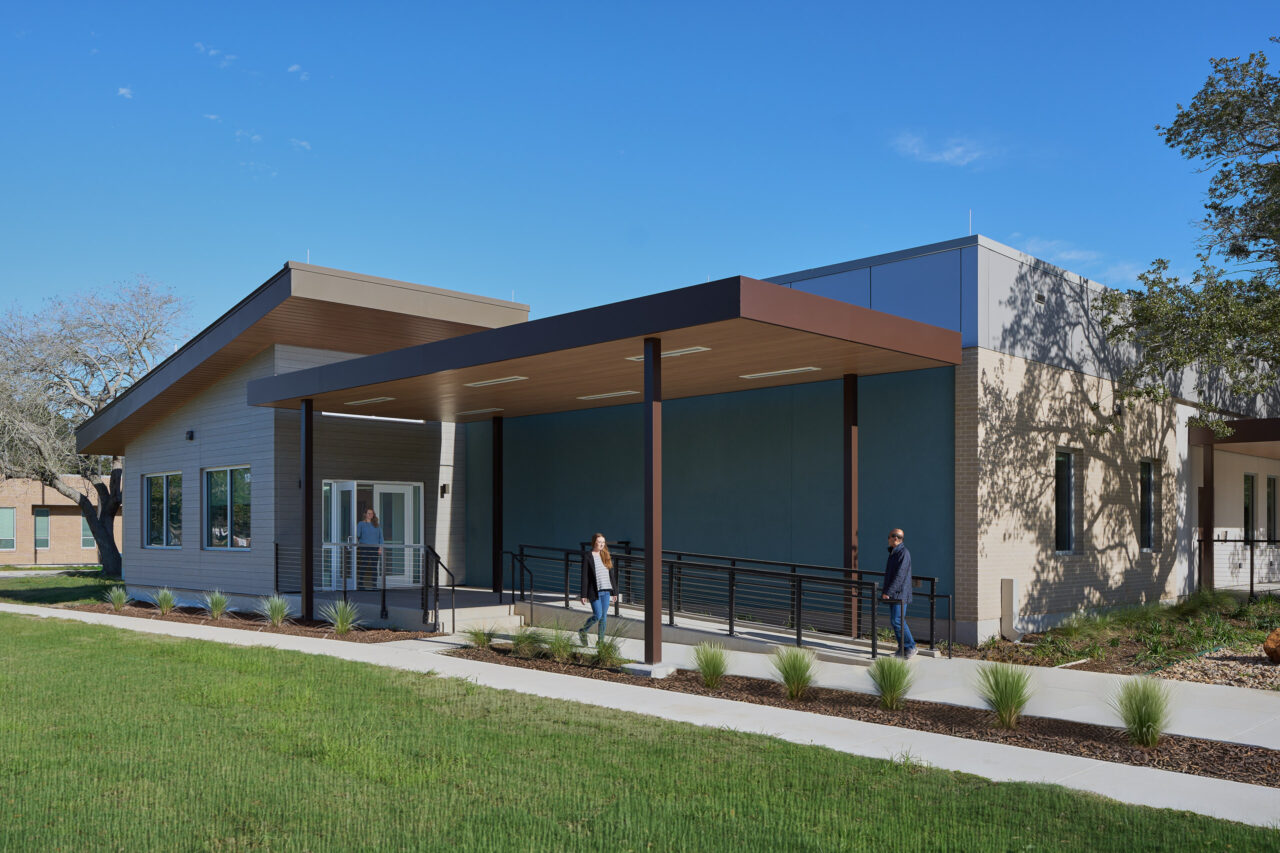
The Galveston County Mental Health Renovation project in La Marque, TX, involves the renovation of a 20,000 SF facility with the addition of a new entrance lobby. This facility will house a 12-patient Extended Observation Unit (EOU) and a 12-resident Crisis Respite Unit (CRU). The project’s primary goal is to provide a more effective alternative for treating community members experiencing a mental health crisis than current options, such as Hospital Emergency Departments or the County Jail.
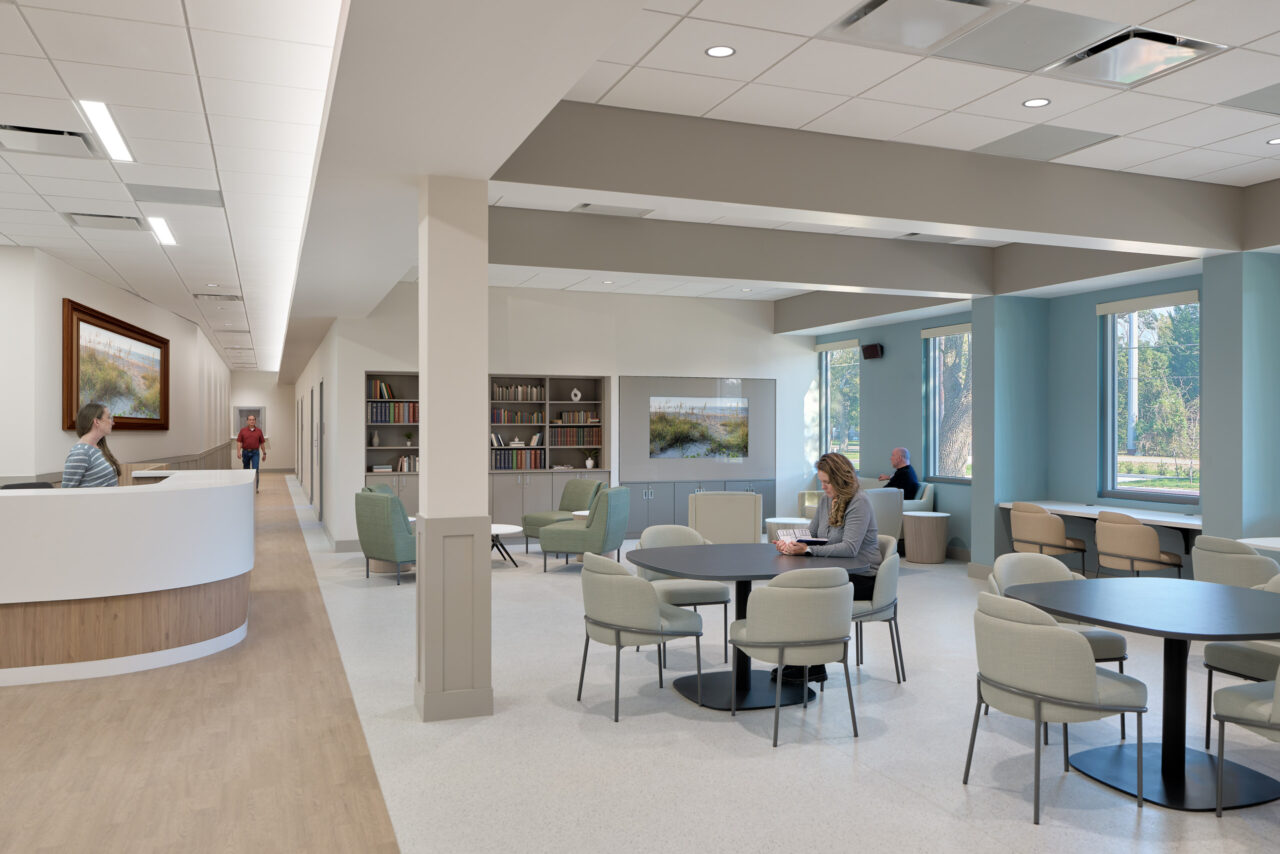
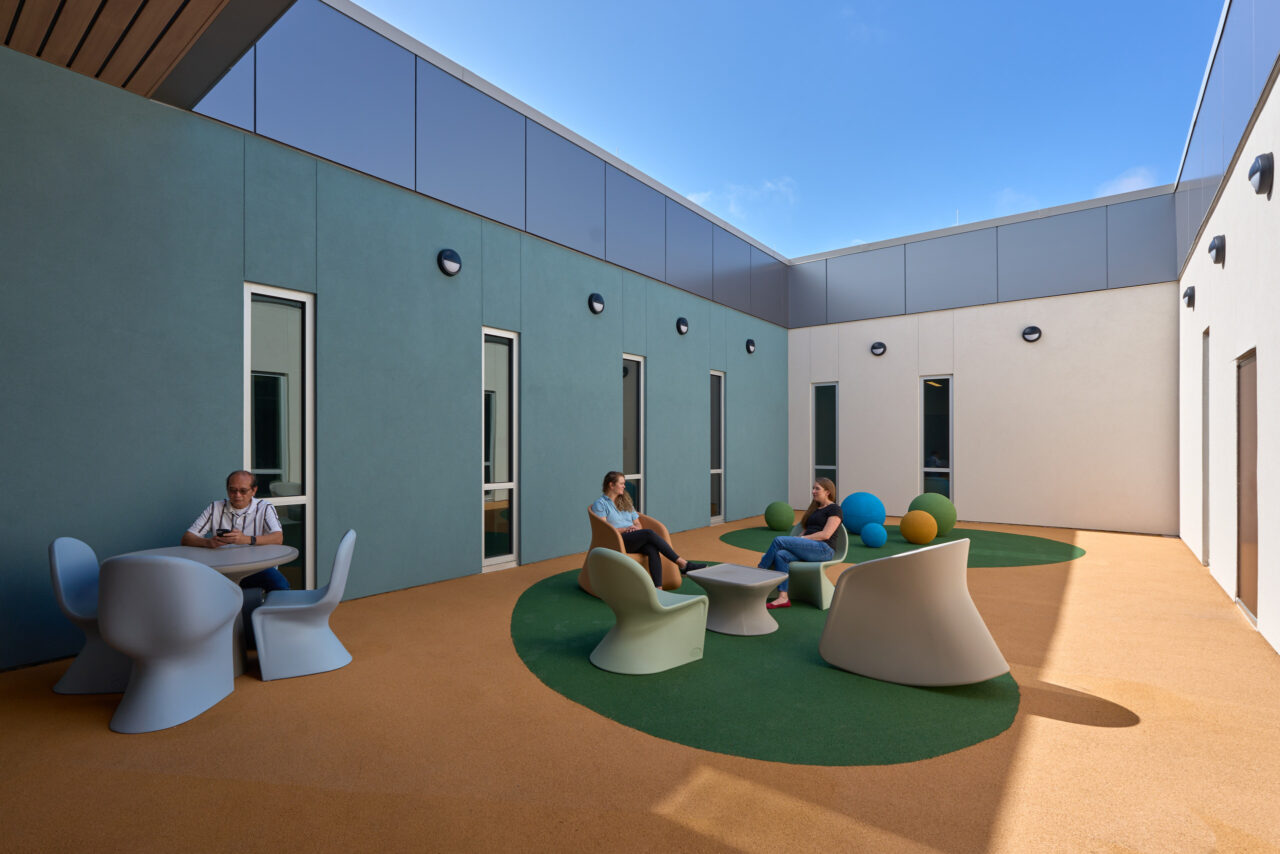
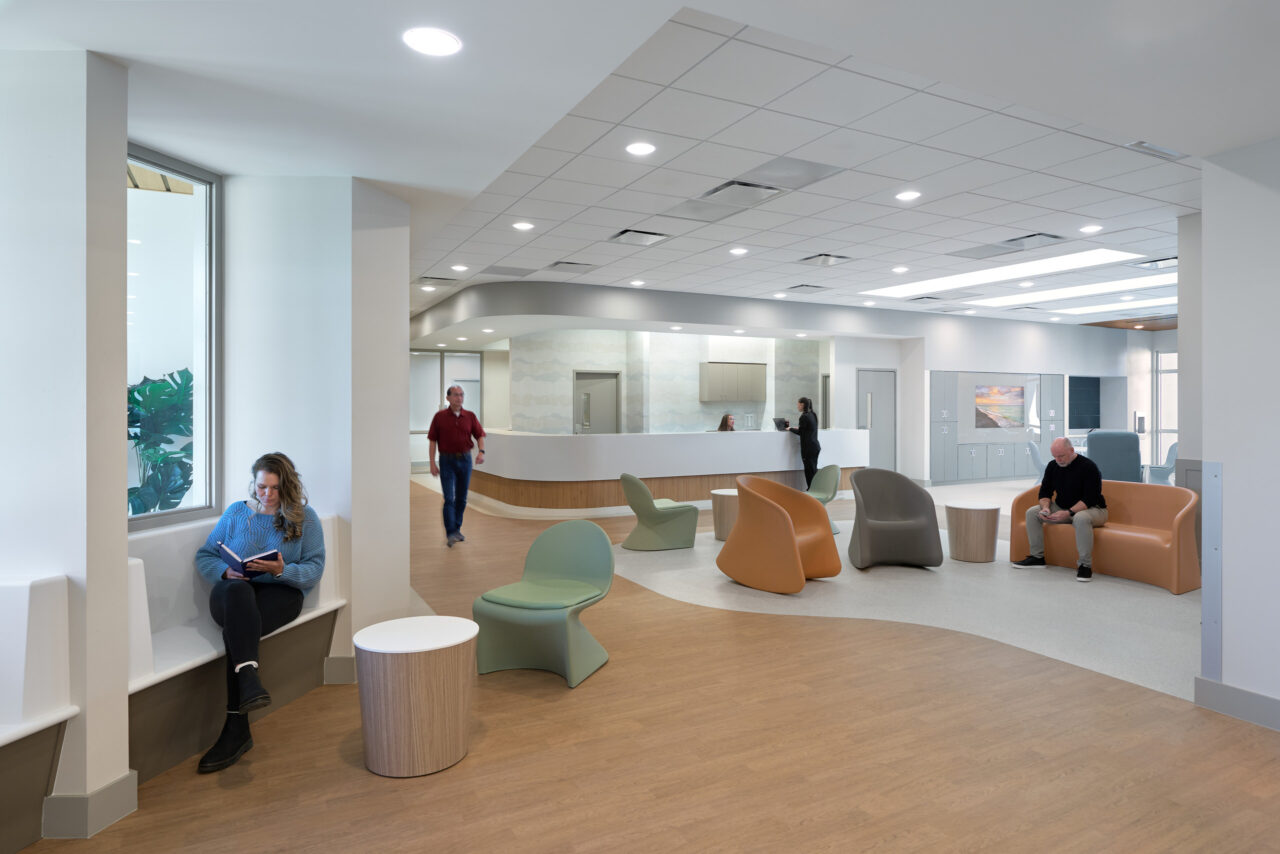
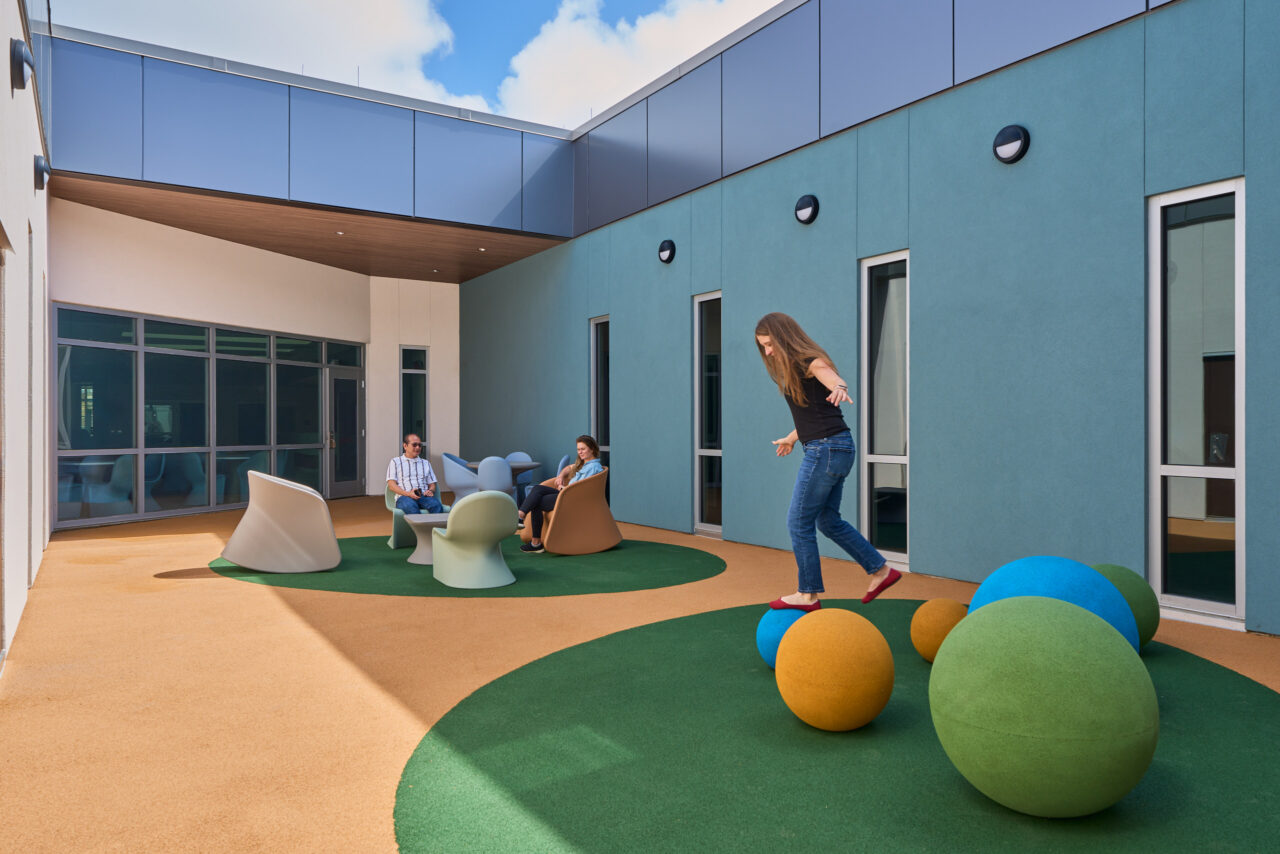
The project faced challenges with the existing, less-than-ideal building footprint. The design needed to incorporate windows for natural light and views in both social spaces and CRU bedrooms, while addressing concerns from neighboring residents regarding the building’s new function. To meet these needs, the design team expanded the existing courtyard to give EOU patients safe, accessible outdoor space, while preserving exterior windows for the CRU residents’ bedrooms. With many of the facility’s users experiencing homelessness, it was essential to apply Trauma-Informed Design principles. A primary interior design objective was to create a sense of safety and ‘home’ through thoughtful selection of finishes and furniture.
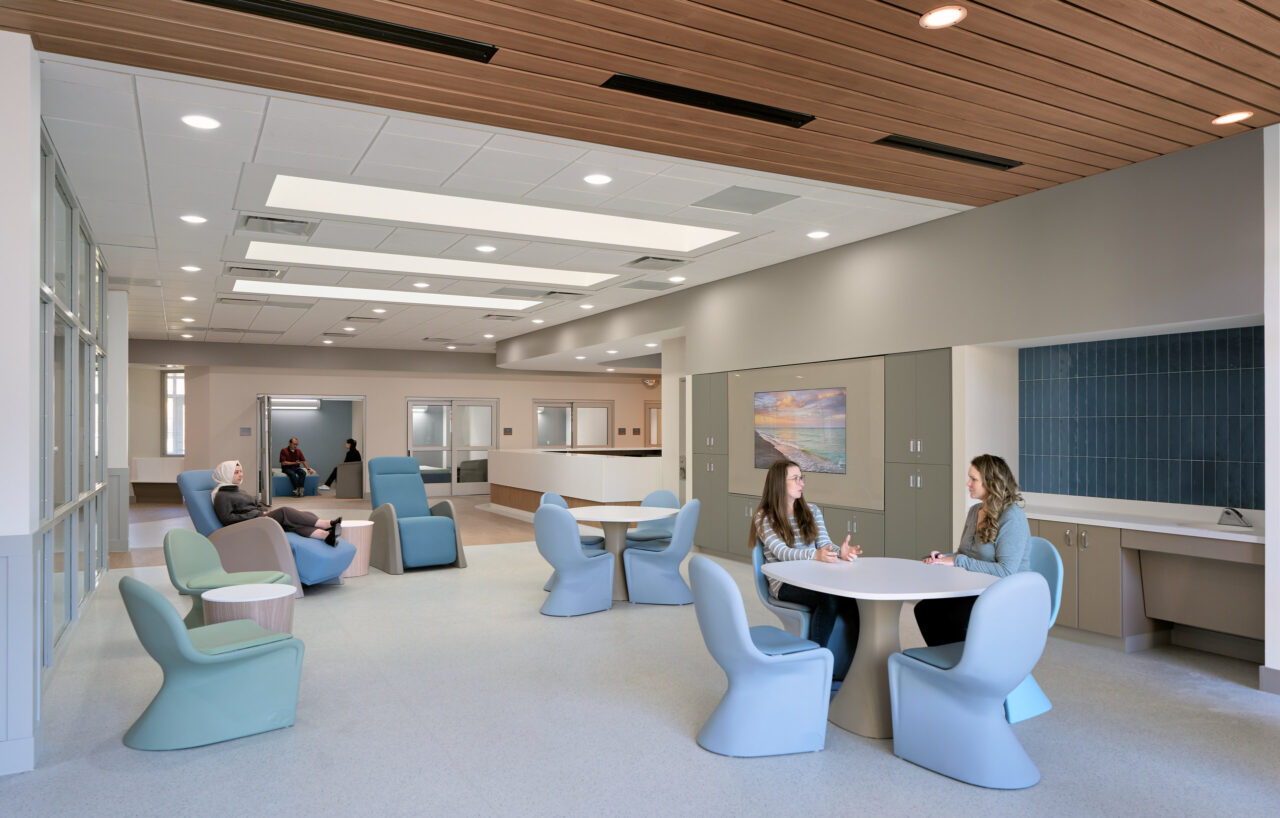
Careful study of sightlines from the nurse station informed the EOU’s geometry and space planning. Patient bedrooms encircle a shared social area, offering a variety of lounge and dining seating. A glass partition serves as a psychological boundary, allowing chairs to back against it while maintaining visibility for staff. Additionally, the EOU features a window nook overlooking a terrarium and expansive views of the therapeutic courtyard.
To maximize spatial and operational efficiency, staff support areas are shared between the EOU and CRU.
The Galveston County Mental Health Renovation project in La Marque, TX, involves the renovation of a 20,000 SF facility with the addition of a new entrance lobby. This facility will house a 12-patient Extended Observation Unit (EOU) and a 12-resident Crisis Respite Unit (CRU). The project’s primary goal is to provide a more effective alternative for treating community members experiencing a mental health crisis than current options, such as Hospital Emergency Departments or the County Jail.
The project faced challenges with the existing, less-than-ideal building footprint. The design needed to incorporate windows for natural light and views in both social spaces and CRU bedrooms, while addressing concerns from neighboring residents regarding the building’s new function. To meet these needs, the design team expanded the existing courtyard to give EOU patients safe, accessible outdoor space, while preserving exterior windows for the CRU residents’ bedrooms. With many of the facility’s users experiencing homelessness, it was essential to apply Trauma-Informed Design principles. A primary interior design objective was to create a sense of safety and ‘home’ through thoughtful selection of finishes and furniture.
Careful study of sightlines from the nurse station informed the EOU’s geometry and space planning. Patient bedrooms encircle a shared social area, offering a variety of lounge and dining seating. A glass partition serves as a psychological boundary, allowing chairs to back against it while maintaining visibility for staff. Additionally, the EOU features a window nook overlooking a terrarium and expansive views of the therapeutic courtyard.
To maximize spatial and operational efficiency, staff support areas are shared between the EOU and CRU.